
Bankim Chandra Chattopadhyay · Bengal during the famine of 1770
Anandamath
4 min read · Theme: Resistance, sacrifice, and devotion to the motherland
Source: Novel, serialised in Bangadarshan 1880–82, published 1882
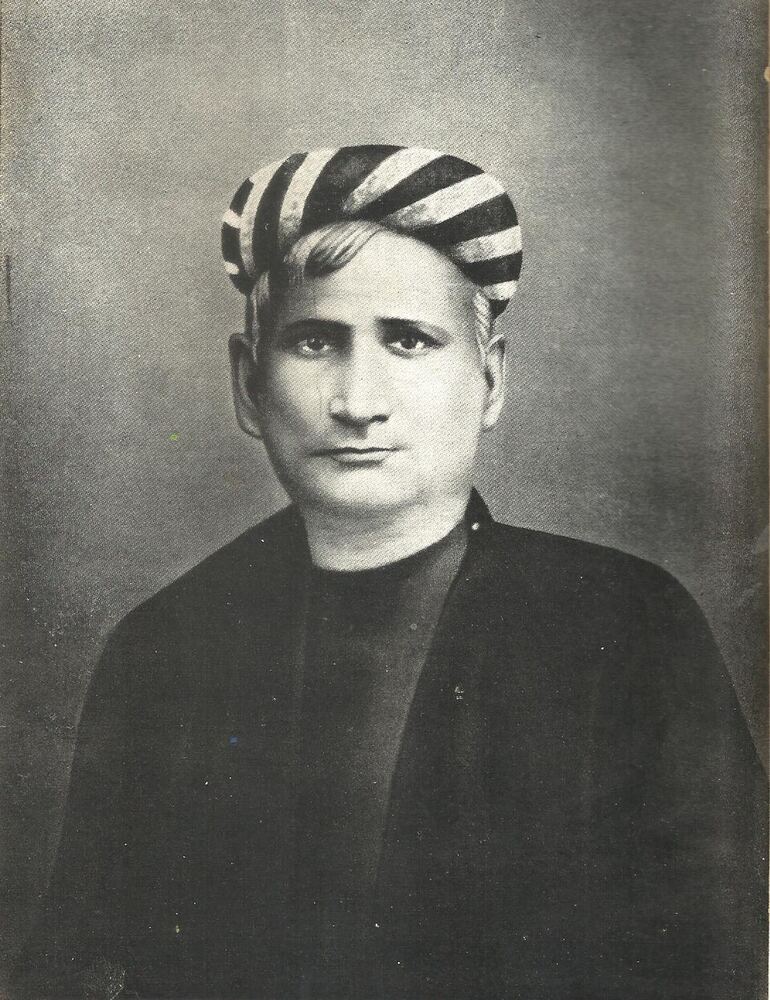
During the great Bengal famine of 1770, a family is torn apart and a band of warrior-monks called the Santans rises against the tax-collectors and the Company's soldiers. The novel gave India the song 'Vande Mataram' and asks what it costs to love a homeland.
It is the Bengali year 1176 — 1770 by the English calendar — and Bengal is dying of famine. In the village of Padachinha the fields are dry, people eat leaves and grass, and corpses lie unburied in the lanes. The wealthy Mahendra Singha and his wife Kalyani, with their baby daughter Sukumari, finally abandon their empty house to walk to the city in search of food.
On the way Mahendra leaves Kalyani in an empty village hut while he goes to find milk for the baby. Starving bandits break in and carry Kalyani and Sukumari off into the forest, meaning to eat them. Kalyani escapes with her child and runs deep into the jungle until she collapses. There she is found by Satyananda, the leader of a secret order of monks.
Meanwhile Mahendra, searching for his family, is caught up with a convoy carrying tax money to Calcutta for the East India Company and is arrested by the soldiers. A band of men attacks the convoy, frees him and seizes the treasure. Their leader is Bhabananda, and as they ride away he sings a song Mahendra has never heard: 'Vande Mataram' — 'I bow to you, Mother', the Mother being the land of Bengal itself.
These men are the Santans, the 'children' of the Mother. They live at Anandamath, the 'abbey of bliss', hidden in the forest. They have given up home and family until the motherland is freed from misrule. Satyananda shows Mahendra three images of the Mother: as she was, rich and glorious; as she is now, dark and stripped bare by famine; and as she will be, radiant once again.
Mahendra longs to join them but cannot abandon his wife and child. Kalyani, learning of this, makes a terrible choice so that he will be free: she swallows poison. Mahendra finds her apparently lifeless and entrusts Sukumari to the Santans' care. Later another Santan, Jibananda, revives Kalyani with a secret medicine, and she lives on quietly, in hiding.
Jibananda has a wife of his own, Shanti, a fearless, learned woman. Rather than wait at home, she cuts her hair, disguises herself as a young male monk named Nabinananda and joins the Santans to fight beside her husband. She proves braver and cleverer than many of the men.
The Santans grow into an army. They raid treasuries and grain stores, and clash again and again with the Company's sepoys and their English commanders. Not all of them are pure in heart: Bhabananda, who has fallen in love with Kalyani, breaks his vow. Ashamed, he seeks redemption in battle and dies fighting at the front.
In the great final battle the Santans, led by Satyananda and armed with captured cannon, defeat the Company's forces. Jibananda, who had also broken a vow, throws himself into the thick of the fighting and falls; Shanti finds him on the battlefield and the two disappear together, leaving the life of the order behind.
Mahendra is reunited with Kalyani and Sukumari, and they return to rebuild their home. But victory does not bring the ending Satyananda expected. On the night of triumph a mysterious healer appears and tells him that his work is finished: the time for his kind of rule has not come, and the people must first gain new knowledge before they can govern themselves.
Weeping, Satyananda lays down his task and follows the healer into the Himalayas. The novel ends not in triumph but in sacrifice and an uncertain future. Its song, 'Vande Mataram', took on a life of its own: it became a rallying cry of India's freedom movement and was later adopted as India's national song.
The Santans lived by strict vows. They ate simply, slept on the ground and trained with weapons, but they also carried messages, hid fugitives and shared what grain they could find with starving villagers. Their songs were not only calls to battle; they were a way to remember the land when famine made it seem stripped of life. For Mahendra, the discipline offered purpose, but it could not answer the cost of leaving Kalyani and Sukumari.
Shanti’s disguise let her move through the camp without being turned away, but it demanded constant care. She bound her hair, lowered her voice and learned the habits of the young monks. Jibananda recognised her, yet their marriage could not return to ordinary life while the vow held them apart. Their story makes the order’s rule personal: service to the country could ask not only for danger, but also for the quiet happiness of home.
The victory over the Company’s forces does not erase the famine, restore every village or settle who should govern Bengal. The healer’s warning forces Satyananda to see the difference between courage and readiness: a people may need knowledge and the means to sustain life before it can build a just order. He leaves the battlefield with the question still open. That unresolved ending is part of the novel’s meaning, not a missing final victory.
“Resistance, sacrifice, and devotion to the motherland”
The complete story, retold in our own words for this archive from the original text.