
Bengali folk-humour tradition · Krishnanagar, Nadia
Gopal Bhar Counts the Crows
5 min read · Theme: Wit against pride
Source: A popular Gopal Bhar tale from the court of Raja Krishnachandra of Krishnanagar (18th century)
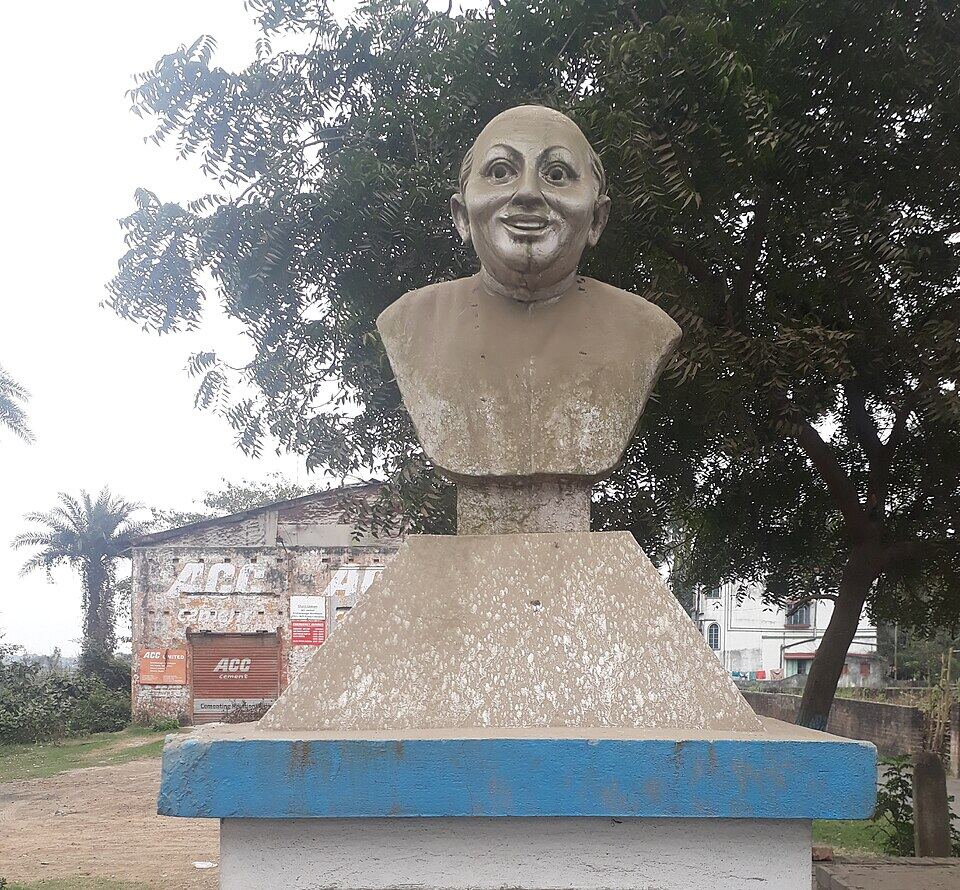
Raja Krishnachandra asks his court an impossible question: how many crows live in Krishnanagar? While learned ministers fumble, the jester Gopal Bhar comes back with an exact number — and an answer for every objection.
In the eighteenth century, Raja Krishnachandra ruled from Krishnanagar in Nadia. His court was famous for poets, scholars and musicians, but the person the Raja enjoyed most was a round-bellied barber's son named Gopal, whose jokes could make even a grieving man smile. People called him Gopal Bhar — Gopal the jester.
Not everyone at court loved Gopal. Some ministers thought a jester had no place among wise men, and they were always looking for a chance to make him look foolish. One hot afternoon the Raja was bored, and he looked out at the crows cawing on the palace walls.
Gopal had come up from nothing. The son of a poor barber, he had grown up hearing the talk of market, kitchen and temple — the places where a country's real wisdom lives — and he had a gift for turning it into laughter. When a pompous visitor once praised himself for a full hour, Gopal had said, 'Maharaj, this man's throat must be a bottomless well: so much is poured in, and not a drop of sense comes out.' The Raja had laughed till he cried. That was the trouble — laughter in a court is a kind of power, and the ministers felt it.
'Tell me,' said the Raja to his court, 'how many crows are there in Krishnanagar?' The ministers looked at one another. One said it could not be known. Another began a long lecture on the habits of birds. A third suggested sending soldiers to every rooftop, which would take a year. The Raja frowned. 'So many learned men, and not one answer?'
One minister smiled slyly. 'Maharaj, surely Gopal knows. He knows everything.' Everyone turned to the jester, expecting him to squirm. Gopal only scratched his belly and said, 'Give me one day, Maharaj. I will count them myself.'
At first light Gopal went to the riverbank, where boatmen were hauling in their nets. He asked each one how many crows he had seen since dawn. One said thirty, another swore there were hundreds; a boy counting on his fingers lost his place whenever a bird flew past. Gopal wrote down every answer, thanked them gravely and moved on. In the market he asked a sweet-seller, two flower girls, a temple drummer and an old woman carrying water. Everyone laughed, but everyone gave him a number.
By sunset Gopal had learned the only honest thing one can say about a town full of wild birds: no count stays true for long. Crows fly from roof to river, from village to town, and back again. Still, the Raja had asked for a number, not a lecture on uncertainty. Gopal chose a number just short of a hundred thousand—large enough to sound convincing, but with room for visitors to come and go.
The next day the Raja asked whether Gopal would stand by his answer if the royal guards counted every bird. Gopal bowed: he would, provided they counted at one exact moment and kept every crow from flying, eating, sleeping or crossing the town boundary. The guards began to protest; the Raja laughed again. The point was not the number but the way Gopal exposed the trap: a question dressed up as precision can still be impossible, and a little common sense may be wiser than a roomful of grand words.
All day Gopal wandered through Krishnanagar, asking boatmen, market sellers, children and neighbours how many crows they had seen. Their guesses were wildly different, and every answer made him smile. By sunset he had learned that no count of wild birds could stay true for long: crows flew from roofs to riverbanks and from village to town. The next morning he came to court, bowed deeply and announced, 'Maharaj, there are exactly ninety-nine thousand, nine hundred and ninety-nine crows in Krishnanagar.'
What the court did not know was that Gopal had, in his own fashion, done exactly what he had promised. He had walked Krishnanagar all day with a slate under his arm, asking boatmen, children, priests and shopkeepers how many crows they believed lived in the town. Every answer was different; every answerer had laughed. By evening the slate was full of numbers and there was still no answer — and it was then, sitting by the river with his sweets, that the true answer came to him.
The court gasped. The sly minister jumped up. 'And if we count them and find fewer?' Gopal answered calmly, 'Then some of them have gone to visit their relatives in the next village.' 'And if we find more?' Gopal spread his hands. 'Then some relatives from other villages have come to visit them. It is the wedding season, after all.'
For a moment there was silence, and then the Raja burst out laughing so hard that his turban slipped. The whole court laughed with him — all except the minister who had tried to trap Gopal, who sat down red-faced.
When the court had emptied, the minister came to Gopal and said stiffly, 'You have made me ridiculous before the Maharaj.' Gopal folded his hands. 'Not at all, Sir,' he said. 'The Maharaj asked a question. You gave a lecture, I gave an answer. Only the crows know which of us told the truth.' The minister could not help smiling, and from that day the two were not quite enemies.
The Raja rewarded Gopal with a bag of silver. 'You did not know the answer any better than they did,' he said, 'but you knew that a foolish question deserves a clever answer, not a long speech.' And to this day, when someone in Bengal asks a question nobody can answer, people smile and say, 'Go and ask Gopal Bhar.'
The silver bag was hung on Gopal's shoulder by the Raja's own hands, and the courtiers saw that the jester bowed lower than usual that day. Walking home, Gopal gave the silver to the first beggar he met. The man stammered, 'Why?' 'Because,' said Gopal, 'you asked no impossible questions today, and still gave me a good answer — thank you.' In Krishnanagar they still tell it so: that the cleverest answer in the town was given by the only man who never pretended to know everything.
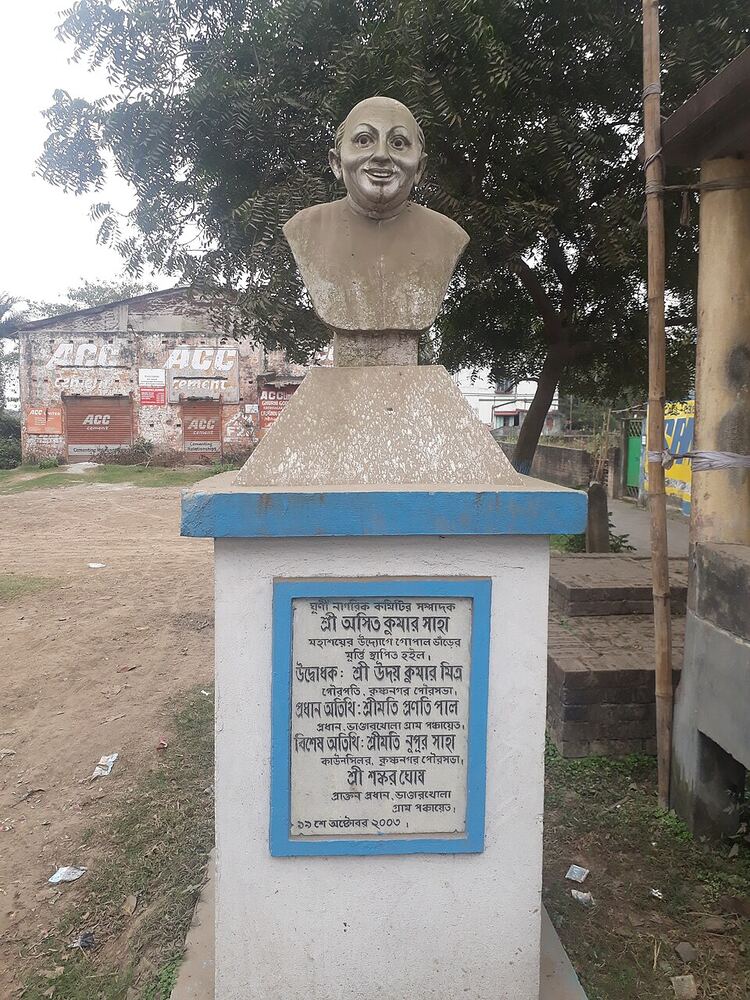
“Wit against pride”
The complete story, retold in our own words for this archive from the original text.