
Rabindranath Tagore · Village Bengal
The Postmaster
7 min read · Theme: Loneliness, attachment, and parting
Source: Short story, 1891 — written while Tagore managed the family estates at Shahzadpur
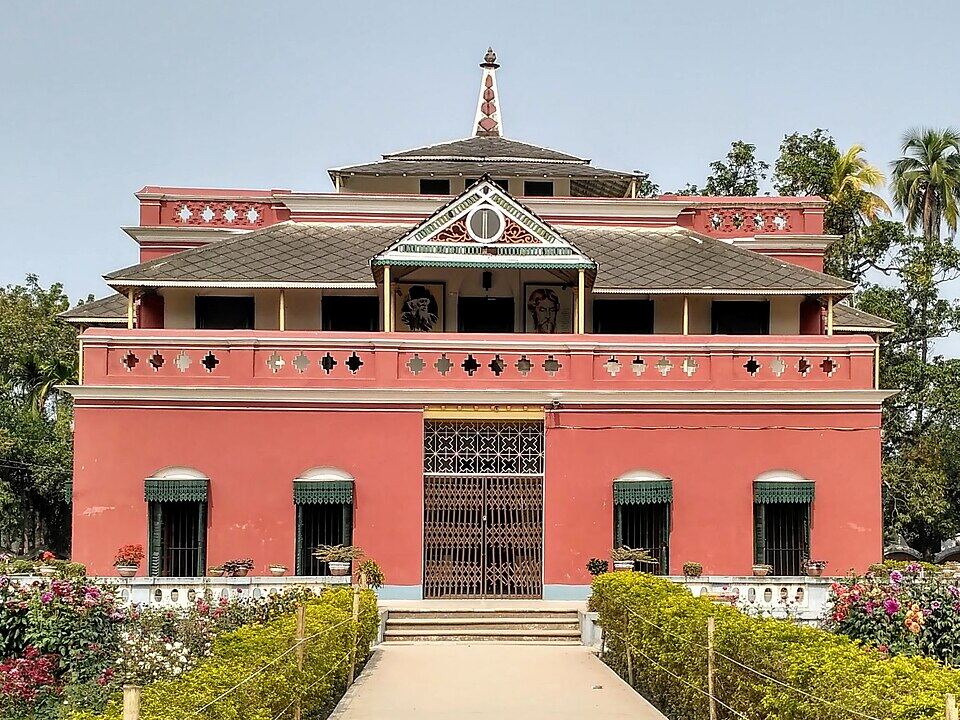
A young clerk from Kolkata is posted to the remote village of Ulapur, where his only companion is Ratan, an orphan girl who keeps house for him. He teaches her to read; she nurses him through a fever. When he leaves for good, only one of them understands what has been lost.
The postmaster's first posting is to Ulapur, an ordinary little village. Near it stands an indigo factory, and it is because of the factory's English owner that the village has a post office at all. The postmaster is a young man from Kolkata. Out here in the countryside he feels like a fish out of water.
His office is a dark thatched room beside a pond green with weeds and surrounded by jungle. The factory clerks are too busy to make friends, and he does not know how to mix with village people. When work is slow he tries to write poetry about the trembling leaves and the clouds — though he secretly thinks he would trade it all for a paved Kolkata street and a tall building.
His salary is small, so he cooks for himself. An orphan girl of the village, Ratan, about twelve years old, does his chores in return for a little food. In the evenings, when smoke curls up from the cowsheds and crickets sing in the bushes, he calls out from his room, 'Ratan!' and she answers from the doorway, 'Did you call me, Dadababu?'
Ratan's history was short and plain. Her father had died of fever, her mother soon after; she had worked in one house and another, slept beside the cattle, and once been beaten for breaking a clay pot. She had never belonged to anyone. So when she was asked to work for the new postmaster, she looked at him with wide, careful eyes, unsure whether this new household would keep her or send her away.
Ratan's history was short and plain. Her father had died of fever, her mother soon after; she had worked in one house and another, slept beside the cattle, and once been beaten for breaking a clay pot. She had never belonged to anyone. So when she was asked to work for the new postmaster, she looked at him with wide, careful eyes, the way a stray dog looks at the first hand that offers food.
Slowly they begin to talk. While Ratan lights the stove, the postmaster tells her about his mother, his elder sister and his little brother far away — things he could never say to the factory men. Ratan, in turn, tells him what she remembers of her own family: her father coming home from work in the evening, her mother, a little brother with whom she fished in the pond with a broken branch. Soon she speaks of the postmaster's mother and sister as if she has known them all her life.
One rainy afternoon, longing for someone close, the postmaster decides to teach Ratan to read. Within days she has learned her letters, the vowels and consonants, and is working through simple words. She treasures each lesson as a gift from him.
The lessons went slowly, lamplight to lamplight. Ratan learned the vowels first, then the consonants, then worked at simple words with her lips moving silently. She learned as a hungry person eats—as if each letter were a gift that might be taken back. Sometimes the postmaster fell asleep over his letter-box, and Ratan sat on, repeating her letters in a whisper till the oil ran low.
The lessons went slowly, lamplight to lamplight. Ratan learned the vowels first, then the consonants, then worked at simple words with her lips moving silently. She learned as a starving person eats — as if each letter were a gift that could be taken back. Sometimes the postmaster fell asleep over his letter-box, and Ratan sat on, repeating her letters in a whisper till the oil ran low.
Then the rains set in for weeks. The canals and ditches overflow, and the postmaster falls ill with fever. Lying alone in that leaking room, he aches for a mother's or sister's hand on his forehead. Ratan is no longer a little girl. She sends for the village doctor, gives him his pills on time, sits up all night by his bed, makes his invalid diet and keeps asking, 'Are you feeling a little better, Dadababu?'
That year the village was half under water. Boats replaced bullock-carts on the roads, snakes swam into courtyards, and the postmaster's fever held on in the dripping hut. In all that grey expanse of rain one small figure kept moving: Ratan, running through the downpour with medicine wrapped in a plantain leaf. The young man who had felt alone in the village was now being cared for with a devotion he had never asked for.
The village that year was half under water. Boats replaced bullock-carts on the roads, snakes swam into courtyards, and the postmaster's fever hung on for days in the dripping hut. In all that grey expanse of rain one small figure moved — a girl of twelve running through the downpour with medicine wrapped in a plantain leaf. Whatever the postmaster had lacked in that village, he lacked it no longer.
The postmaster recovers, but weak and miserable, he decides he has had enough of this unhealthy place. He applies for a transfer. While he waits for the reply, Ratan sits outside his door every day, waiting for him to call her for a lesson. But he no longer calls.
A week later, he calls her in. 'Ratan, I'm leaving tomorrow.' 'Where are you going, Dadababu?' 'Home.' 'When will you come back?' 'I'm not coming back.' His transfer was refused, so he has resigned. Ratan asks nothing more. That evening the lamp gutters out, rain drips through the roof, and neither of them speaks for a long time.
Then Ratan says softly, 'Dadababu, will you take me home with you?' The postmaster laughs. 'How could I do that?' He does not explain why it is impossible; to him it is obvious. All night, awake and asleep, Ratan hears his laughing voice: 'How could I do that?'
The question was not a request for wages or a promise of comfort. Ratan was asking whether the small family she had imagined—the mother and sister from his stories, and the lessons by the lamp—could become real. His laugh answered before he understood the question. She went quiet, and the room seemed to grow larger around the two of them.
In the morning Ratan has his bath water ready before dawn, as always. The new postmaster arrives, and the old one hands over his charge. Before going, he holds out almost all of his month's salary. 'Ratan, I've never been able to give you anything. Keep this.' Ratan falls at his feet. 'Dadababu, please, I beg you, I don't want anything. Nobody needs to worry about me.' And she runs away.
The postmaster sighs, picks up his bag and umbrella and walks to the boat. The river is swollen with rain, and as the current carries the boat away, he feels a sharp pain. He imagines going back for the orphan girl. But the sail is full and the village is already slipping behind. He consoles himself with a philosopher's thought: life is full of partings, and what is the use of turning back?
But Ratan has no such philosophy. She keeps wandering around the post office, tears running down her face, half hoping that her Dadababu might come back. Tagore ends by saying that this is how people are: we cling to false hopes against all reason, until one day they slip away and leave us — and then we look for another to hold on to.
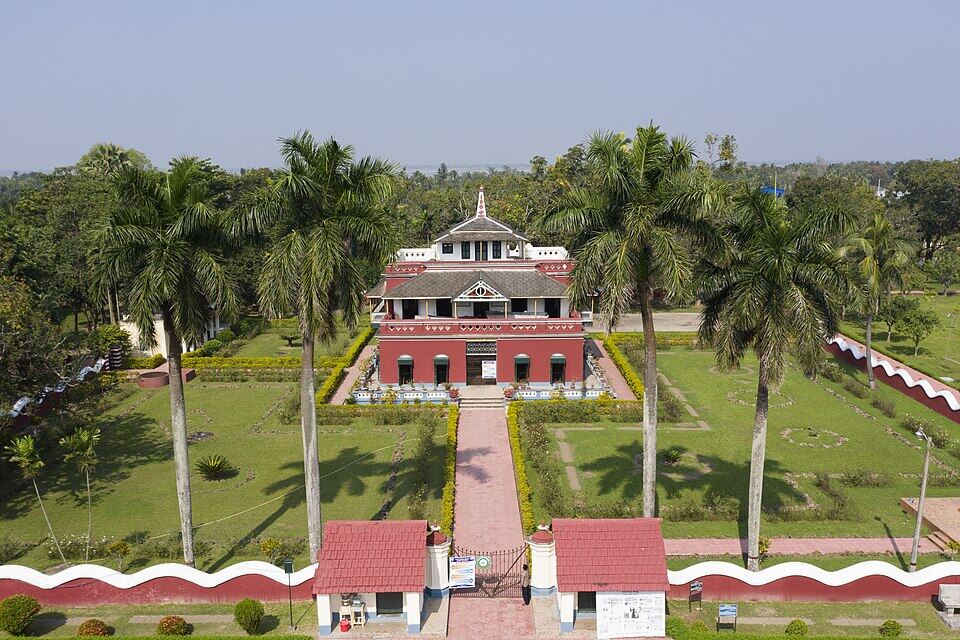
“Loneliness, attachment, and parting”
The complete story, retold in our own words for this archive from the original text.