
Sarat Chandra Chattopadhyay · Talsonapur village and Kolkata
Devdas
5 min read · Theme: Love, pride, and social barriers
Source: Novel, written 1900, published 1917
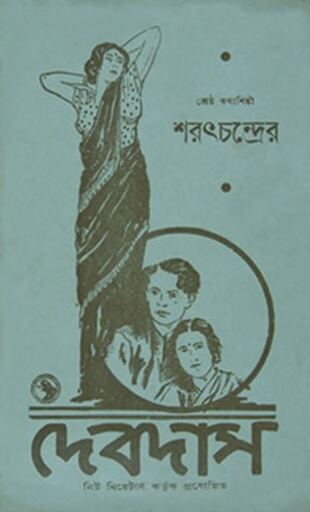
Devdas, the son of a rich landlord, and Parvati, the girl next door, have loved each other since childhood. When his family refuses the match and he hesitates, Paro is married to an older widower. Devdas drifts to Kolkata, to drink and to the courtesan Chandramukhi — and keeps one last promise to Paro.
In the village of Talsonapur, Devdas Mukherjee is the younger son of the wealthy zamindar Narayan Mukherjee. Next door lives Parvati — Paro — daughter of a much poorer family. As children they are always together: Devdas is the leader in every piece of mischief, Paro his faithful follower. He bullies her, scolds her and even hits her, but if anyone else so much as frowns at her, he flies to her defence.
The village knew the pair as a little procession: Devdas in front, inventing a game, and Paro close behind, carrying whatever they had found. They stole guavas from the orchard, raced along the pond and returned home muddy. If Paro was scolded, Devdas argued; if he was punished, she waited nearby until his anger passed. Neither child had words for the closeness that made every quarrel brief and every separation feel long.
Devdas is too wild for the village school, so his father sends him to Kolkata to study. Paro weeps for days. Years pass. When Devdas returns, he is a polished young city gentleman, and Paro has grown into a beautiful young woman. They are suddenly shy with each other, and both realise that their childhood friendship has become love.
Paro's grandmother hints to Devdas's mother that the two should marry. But Devdas's parents refuse. Paro's family, they say, belongs to a lower status, and they follow the custom of taking a bride-price for their daughters — a family 'that sells its girls'. Hurt and insulted, Paro's father vows to find her a richer match within weeks.
Paro heard the refusal and felt the familiar world shift around her. Her family had affection and pride, but little influence beside the Mukherjees. Her father could not make the wealthy household change its mind, and he would not let his daughter wait for a boy who would not stand up for her. The match with Bhuvan was arranged quickly. Paro listened, silent, as the adults began to speak of gifts, ceremonies and dates.
In desperation Paro does something unheard of: in the middle of the night she slips out of her house, goes to Devdas's room and begs him to marry her. Devdas is shaken by her courage, but he is afraid of his father. He sends her home and the next morning tries timidly to speak to his parents. When his father refuses angrily, Devdas runs away to Kolkata.
From Kolkata he writes Paro a cold letter: he has never really loved her, and they must forget each other. Almost as soon as the letter is posted, he regrets it. He hurries back to the village to tell Paro he will marry her whatever happens — but it is too late. Paro's wedding has been fixed with Bhuvan Chowdhury, a rich widowed zamindar from Hatipota, twice her age and with children older than she is.
Devdas meets Paro by the village pond. She is proud now, and will not break her word to her family. In a burst of anger and wounded pride, Devdas strikes her on the forehead with the handle of his fishing rod, leaving a cut. 'Let this scar remind you of me,' he says. Paro is married and goes away to Hatipota, where she becomes a dutiful, respected mistress of a large household.
In Kolkata, Devdas's friend Chunilal takes him to the house of Chandramukhi, a celebrated courtesan. At first Devdas treats her with contempt. But Chandramukhi falls deeply in love with this proud, miserable man. To deaden his pain, Devdas begins to drink, and soon cannot stop.
Chandramukhi had expected a rich visitor who would admire her singing; instead she met a man who seemed determined not to enjoy anything. He spoke harshly and barely looked at her. Yet she saw that his cruelty was turned mostly inward. He did not ask to be rescued, but she began to care for him, and the old life of performance and payment started to feel empty beside that private concern.
His father dies, and Devdas returns home for the funeral. Paro, who has come to her parents' house, visits him and pleads with him to stop drinking and to let her look after him. Devdas cannot promise. But he does make her one promise: before he dies, he will come to her door once more.
Chandramukhi gives up her old life for Devdas, moves to a village and lives simply, hoping one day to serve him. Devdas comes to her once, ill, and she nurses him. He tells her gently that if there is another life, he hopes to meet her there. Then he drifts away again, travelling aimlessly with a servant, drinking, his health in ruins.
When he leaves, Chandramukhi does not try to hold him by force. She knows his promise to Paro belongs to him alone, and the small hope he offers about another life is not a promise she can demand. She watches him go with the knowledge that love cannot make him choose health, nor make him return the love she has given. Still, she keeps the door open whenever he comes back ill and exhausted.
Knowing that the end is near, Devdas remembers his promise. He takes a train towards Hatipota and then a cart through the night. He reaches the gate of the Chowdhury mansion and collapses under a tree. In the morning the villagers find a dying stranger. He dies there, alone, with Paro's name on his lips.
When word reaches the house that a man named Devdas from Talsonapur has died at the gate, Paro runs towards the door. But the family, thinking of their honour, close the doors on her, and she faints on the threshold. Sarat Chandra ends by asking his readers to pray that no one should die as Devdas did — far from the hands of those who loved him.
“Love, pride, and social barriers”
The complete story, retold in our own words for this archive from the original text.